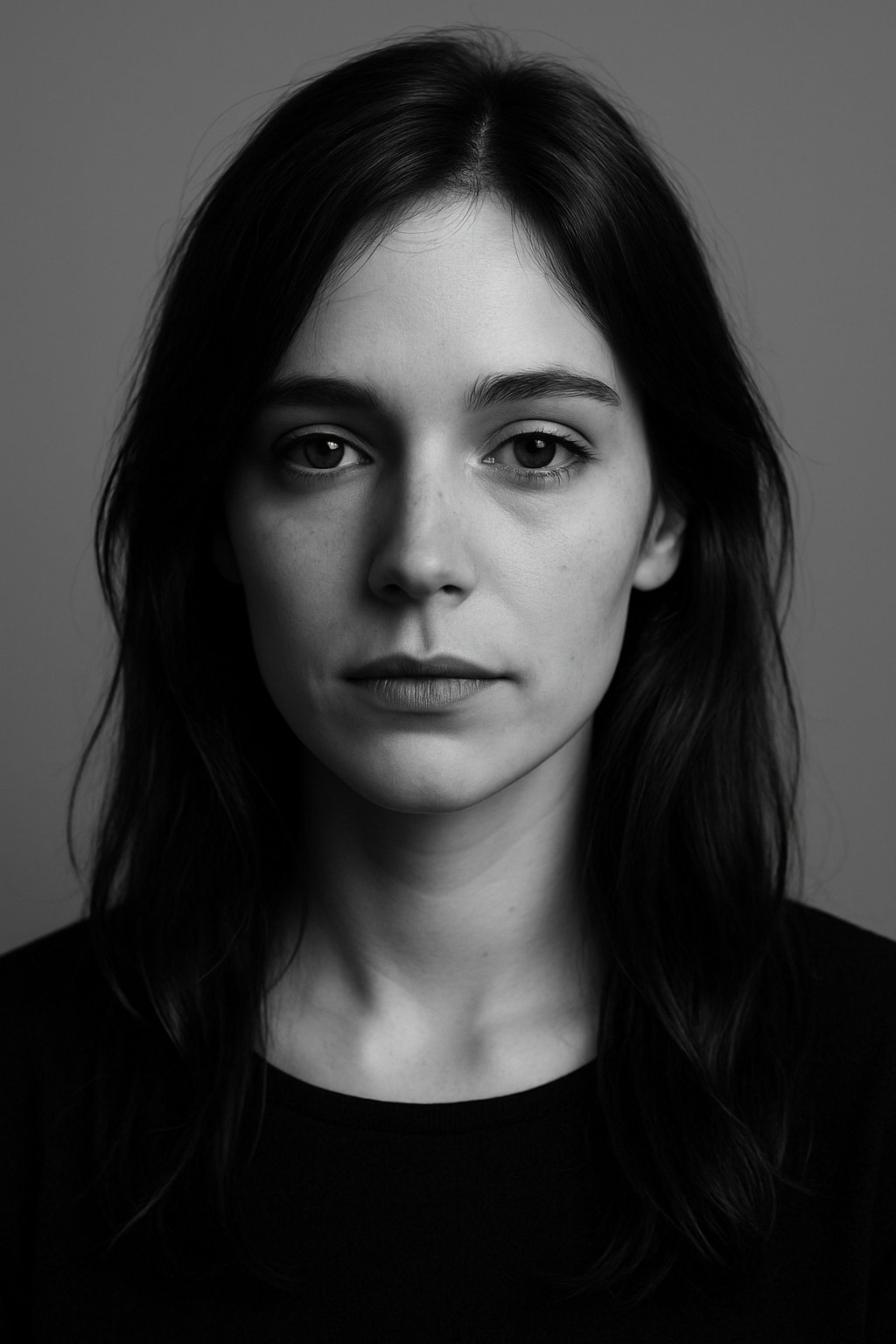
There are feelings, Penelope Brair says, that don't have the right address. You look for them in conversations and they're not there. You look for them in the people who know you best and they're still not there. Then you hear a record — or you're in the wrong city at the right hour — and something finds you that wasn't looking.
"I think that's what music is actually for," she says. "Not to express things. To locate them. There's a difference."
She is specific about this distinction and several others. She is specific in general — about what she notices, where she places her attention, how long she stays with things. She doesn't divide attention very well, she says. Once something has it, it tends to keep it.
"I'm not built for the middle register," she admits. "With people, with places, with songs. I apologised for that for a long time. I'm not sure I believed the apology."
She grew up between Porto and Vigo — a coastline that belongs to two countries and fully to neither, where the Atlantic comes in low and grey and the granite absorbs the rain like it has been absorbing it for centuries. The light there has a specific quality: overcast but not absent. Present but not insisting.
Her father photographed things. Not events, not faces — things. The way light behaved on a specific wall at a specific hour. The texture of a rope on a dock. The inside of a fishing boat at dusk. He believed, she thinks, that paying close attention to small things was a form of love that most people forgot to practice.
He gave her his film cameras before he died. She was fourteen. She has never used them to take photographs.
"I keep them because of what they meant about how he looked at the world. I didn't want the images. I wanted the looking."
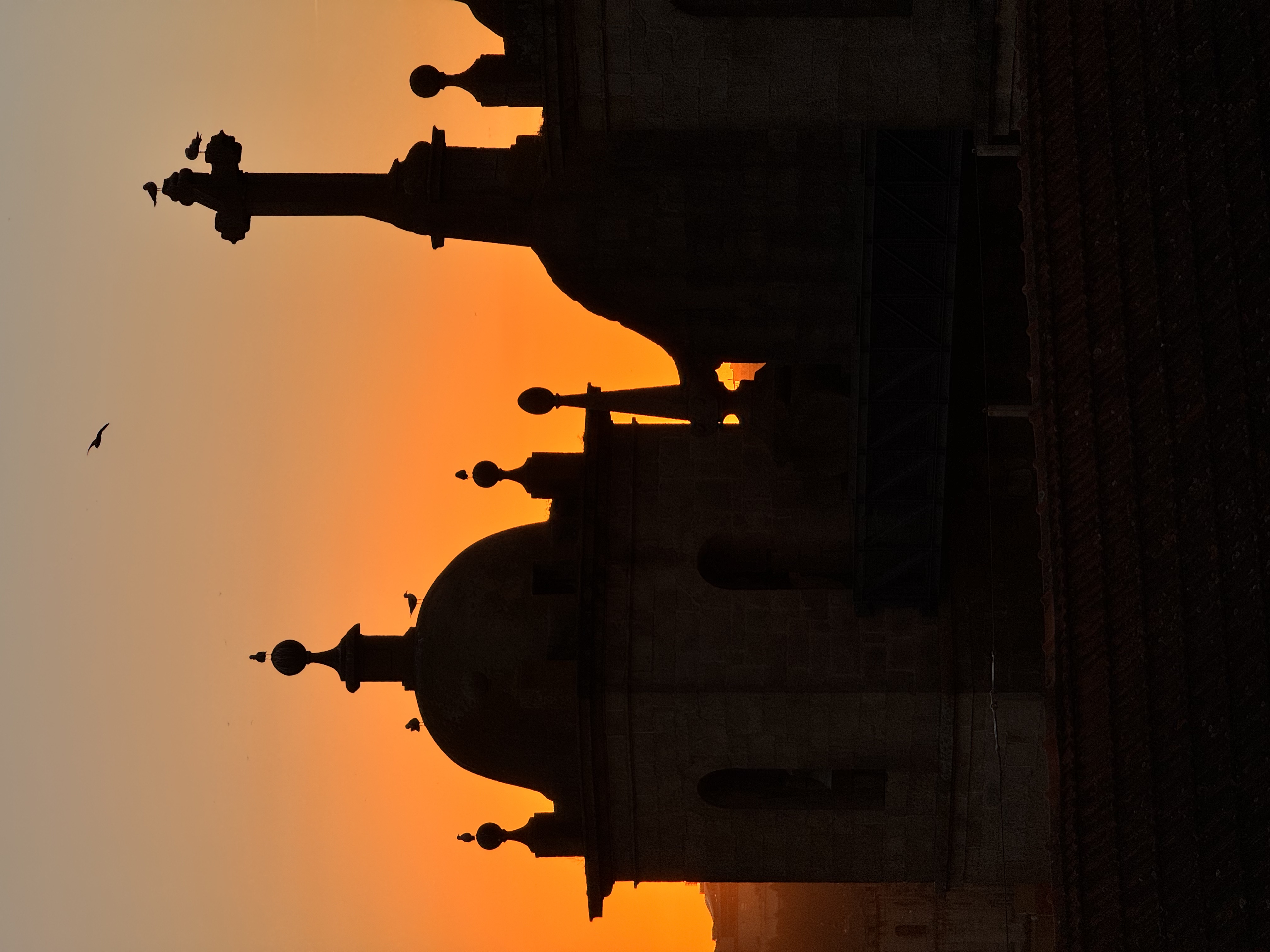
Porto
His camera was a Contax — a precision German instrument, the kind serious photographers chose because it demanded serious looking. On the shelf where it sits now, among his lenses, are the German dictionaries she bought years later to learn the language well enough to understand the word she already carried — Fernweh. The longing for somewhere you've never been. Next to them, Der Kleine Prinz. Schopenhauer in Portuguese. A shelf that belongs to someone who lives between languages, who learns them because each one holds something no other can.
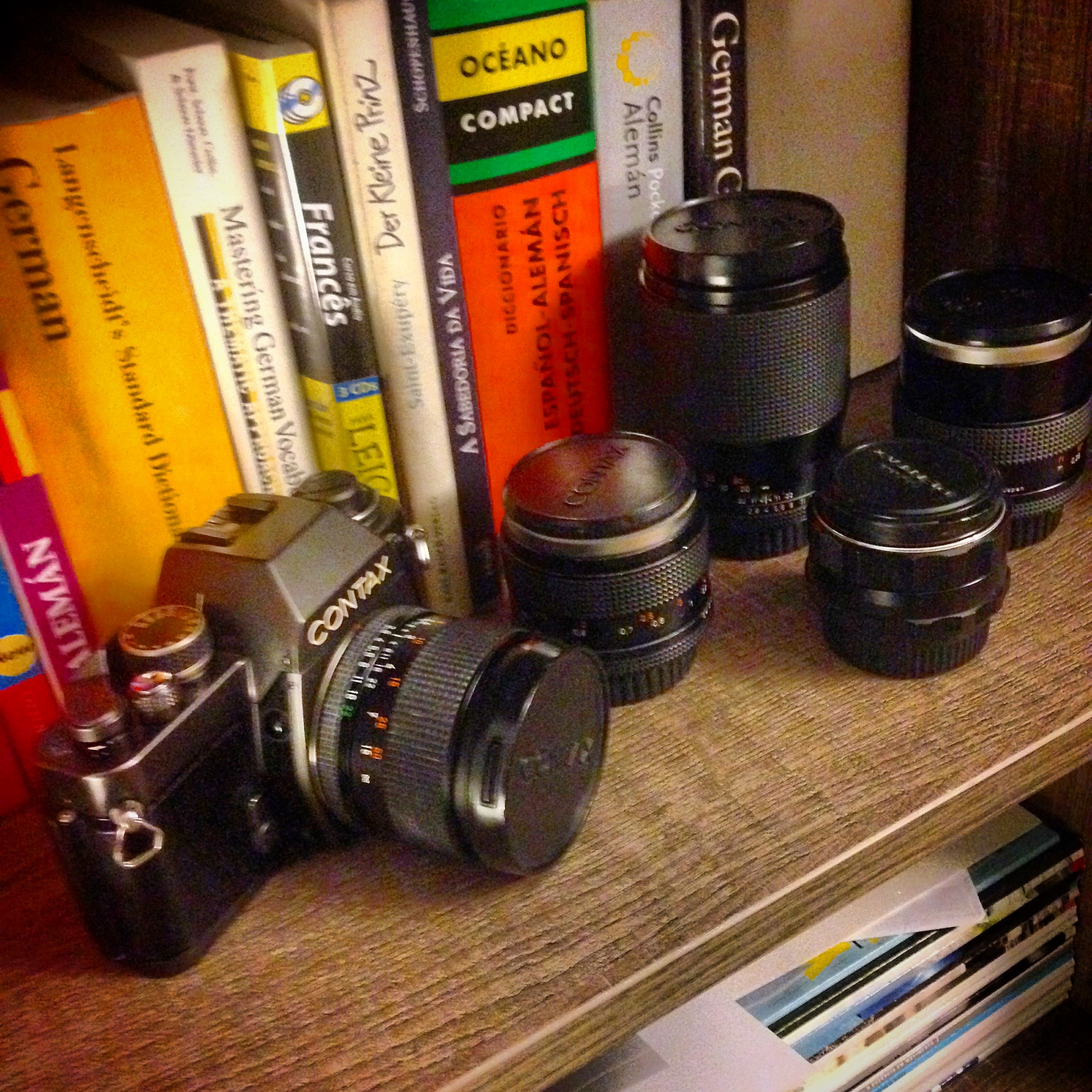
His Contax. Her dictionaries.
She went to Central Saint Martins in London to study textile design, which surprises people who expect her to say something more obviously musical. She doesn't find it surprising at all.
"Textiles taught me that people touch things emotionally long before they understand them intellectually. You don't think about fabric — you feel it first, then the thought comes later, if it comes at all. I think that's how I try to approach a song."
London itself gave her something less poetic. "It made me tired in a very specific way," she says. "The city was always slightly aware of itself. Even the quiet parts felt like they were performing quiet."
What she took from London, more than anything, was the particular restlessness that comes from being in a place that never fully claims you.
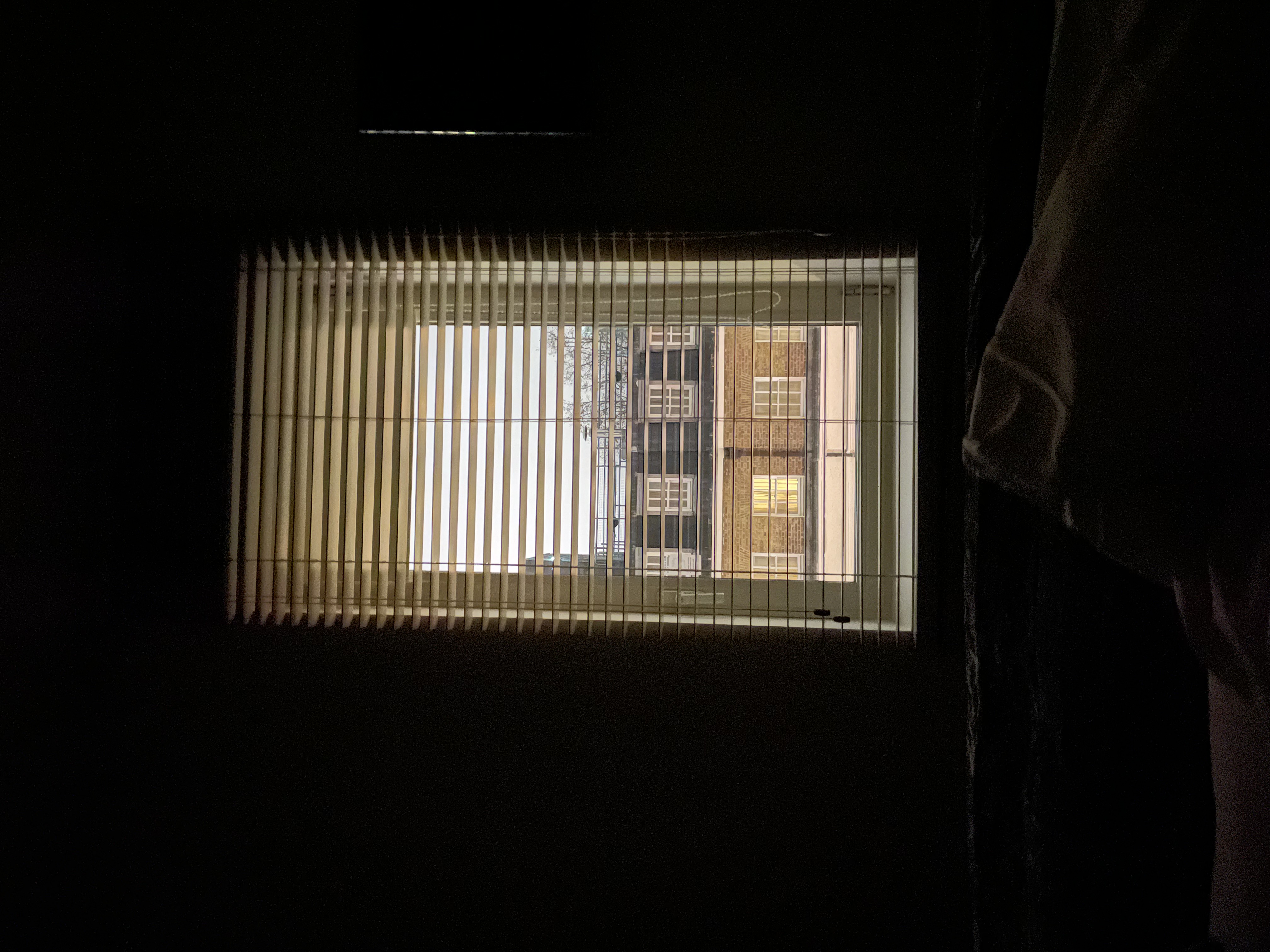
London
And a watch. Bought in Camden Town during her first week — silver, handwound, from the Second World War. A Helbros. It keeps approximate time.
"I find that more honest than precision," she says. "I distrust things that are too certain of themselves."
She looked up the name engraved on the back later. Found an obituary. Addison had fought in the Pacific, come home, married Betty, raised two children, lived a long and ordinary life. She read it several times.
"It gave me comfort. Knowing he made it back to her."
She winds the watch every morning.
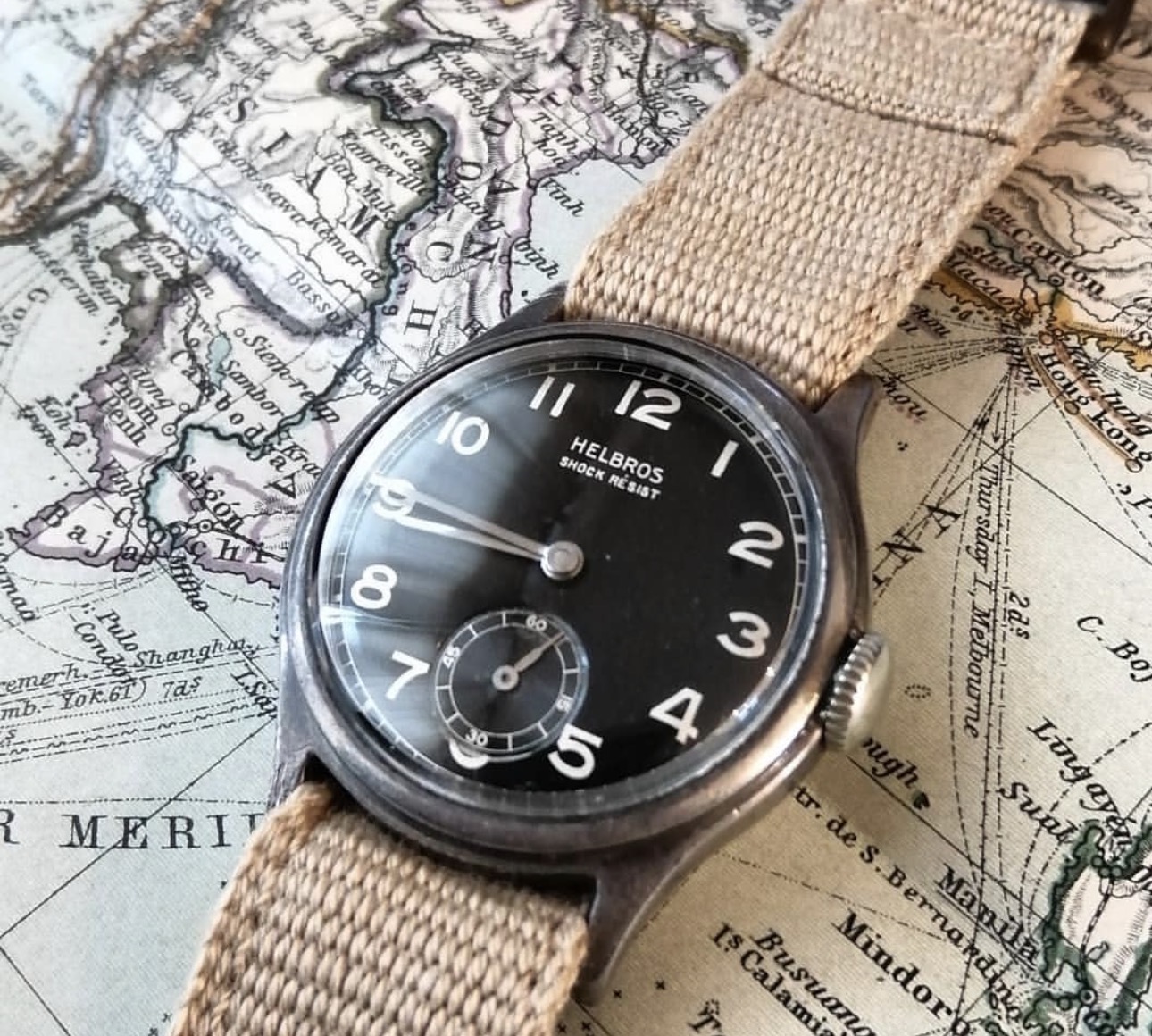
Camden Town, 1943
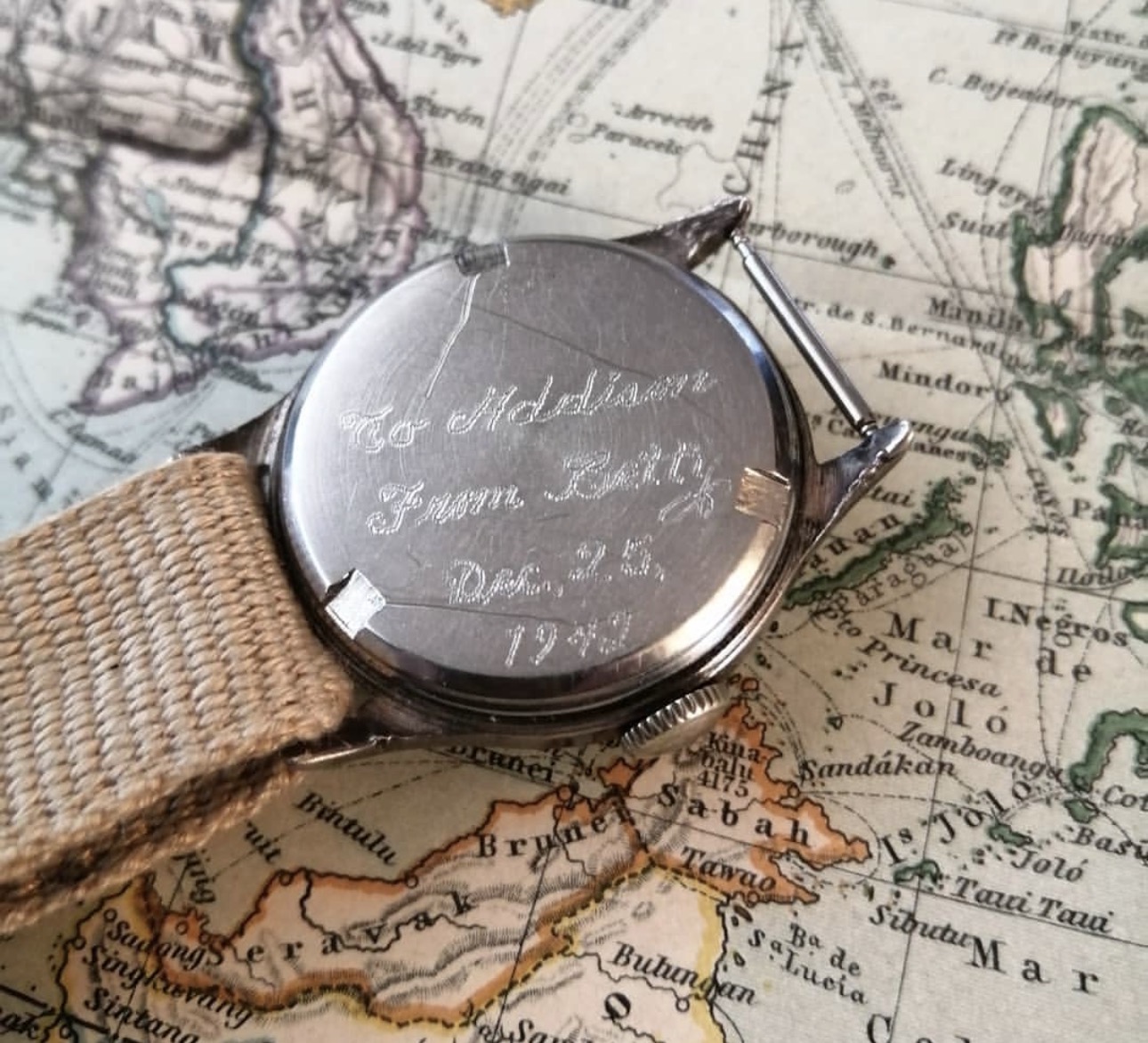
To Addison. From Betty.
She started singing at seven, kept it private until she was seventeen, then kept it mostly private for years after that. No training, no formal study, no performance until she was ready — except readiness, she says, was never quite the right word.
"I think readiness is a story you tell yourself after the fact. I wasn't ready. I was just more tired of waiting than I was afraid."
Her references move in a specific direction. Portishead's Dummy — "the most honest record about dislocation I've heard, and I've heard it four hundred times and it still knows things about me I haven't worked out yet." Arooj Aftab — "she makes music that doesn't ask you to believe in anything, just to be present. That's very hard to do and almost no one does it." Nan Goldin's photographs — "the ones that look like someone took them because they had no other choice. That's the only reason to make anything."
Then, without changing tone: "My father used to sing Chris Isaak in the shower. Wicked Game, every time. Completely seriously." She pauses. "I still think that song is almost perfect."
She also loves bossa nova, which she says is the most emotionally intelligent music ever made about longing — "because it's not sad exactly. It's happy about being sad. That's a very specific and very rare feeling."
She is not interested in art that explains itself or reassures. She is also not interested in suffering as an aesthetic.
"I think people are capable of staying with difficult things much longer than we assume," she says. "The problem isn't that they can't handle it. The problem is that most things don't trust them enough to try."
São Paulo was not a plan. She arrived after London, stayed through circumstance, and then stayed by choice — which is, she says, the only honest way a city keeps you.
"I expected to miss Europe more," she says. "But São Paulo has a specific kind of energy that I hadn't encountered. It doesn't stop — but it's not exhausting the way London was. The noise there has weight. Here the noise has leveza. Lightness. It moves differently."

São Paulo
For someone raised on European Portuguese, Brazilian Portuguese is the same river flowing through different terrain. The words are the same. The cadence is entirely its own — warmer, more open, less guarded at the edges.
"It's like hearing your mother tongue sung instead of spoken," she says. "The same language but with something African in it, something that opens the vowels differently. I find I speak more slowly here. I breathe more slowly."
She stays up late. The city suits this. São Paulo at three in the morning is not the city winding down — it's the city at a different frequency, and she writes in that frequency, coffee made, window cracked, the sound of a city that has stopped pretending it has anywhere to be.
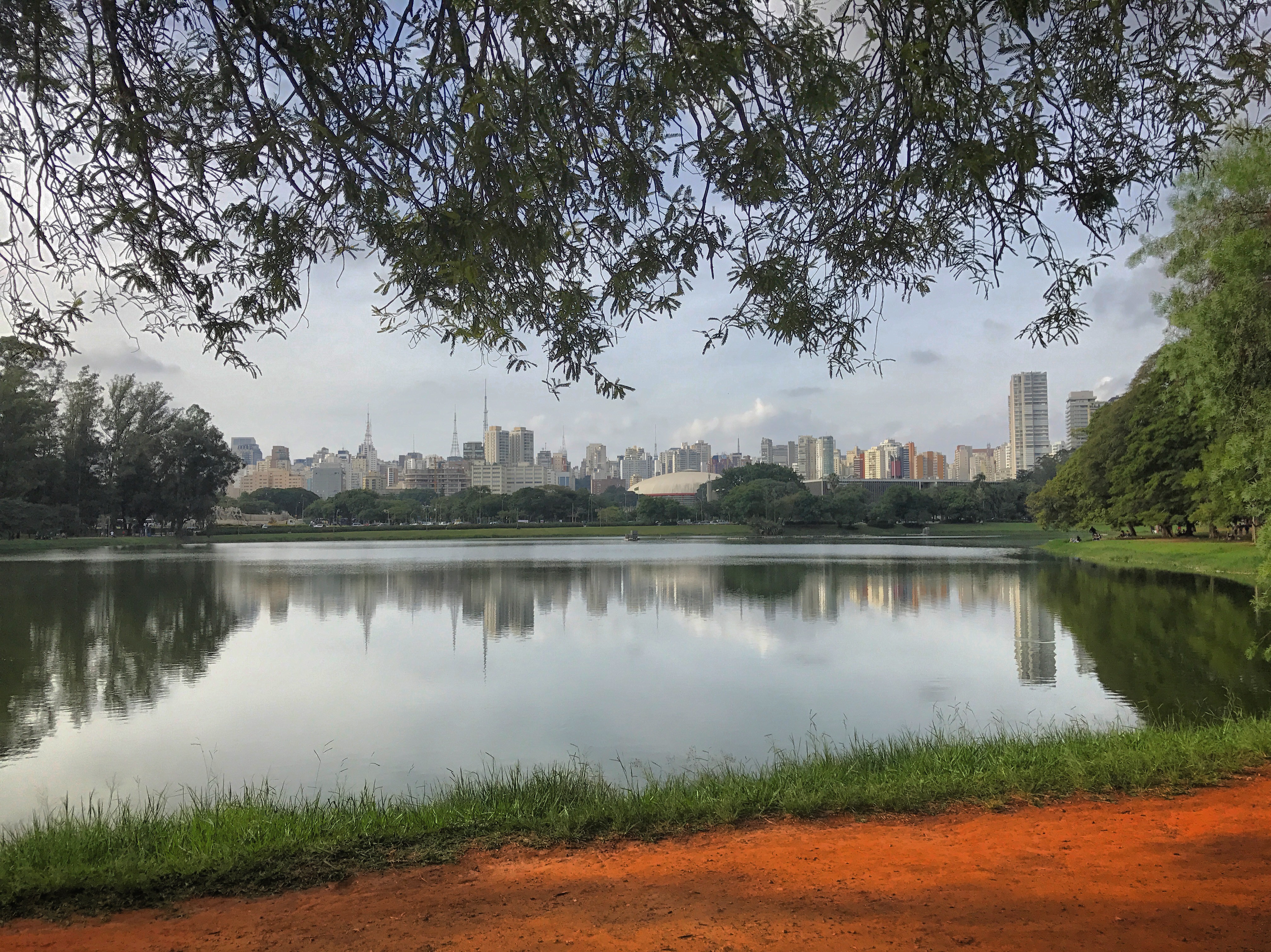
Ibirapuera, São Paulo
Same Light was recorded in Rio de Janeiro — a different city, a different register entirely. Where São Paulo is density and motion, Rio is open to the sky, the water always visible, the mountains behind everything like a held breath.
"Rio changes how you carry yourself," she says. "Something about the light there — and the water. The cover image, Penelope by the bay at dusk with the Sugarloaf behind her — that wasn't composed. That was just where we were at that hour."

Rio de Janeiro
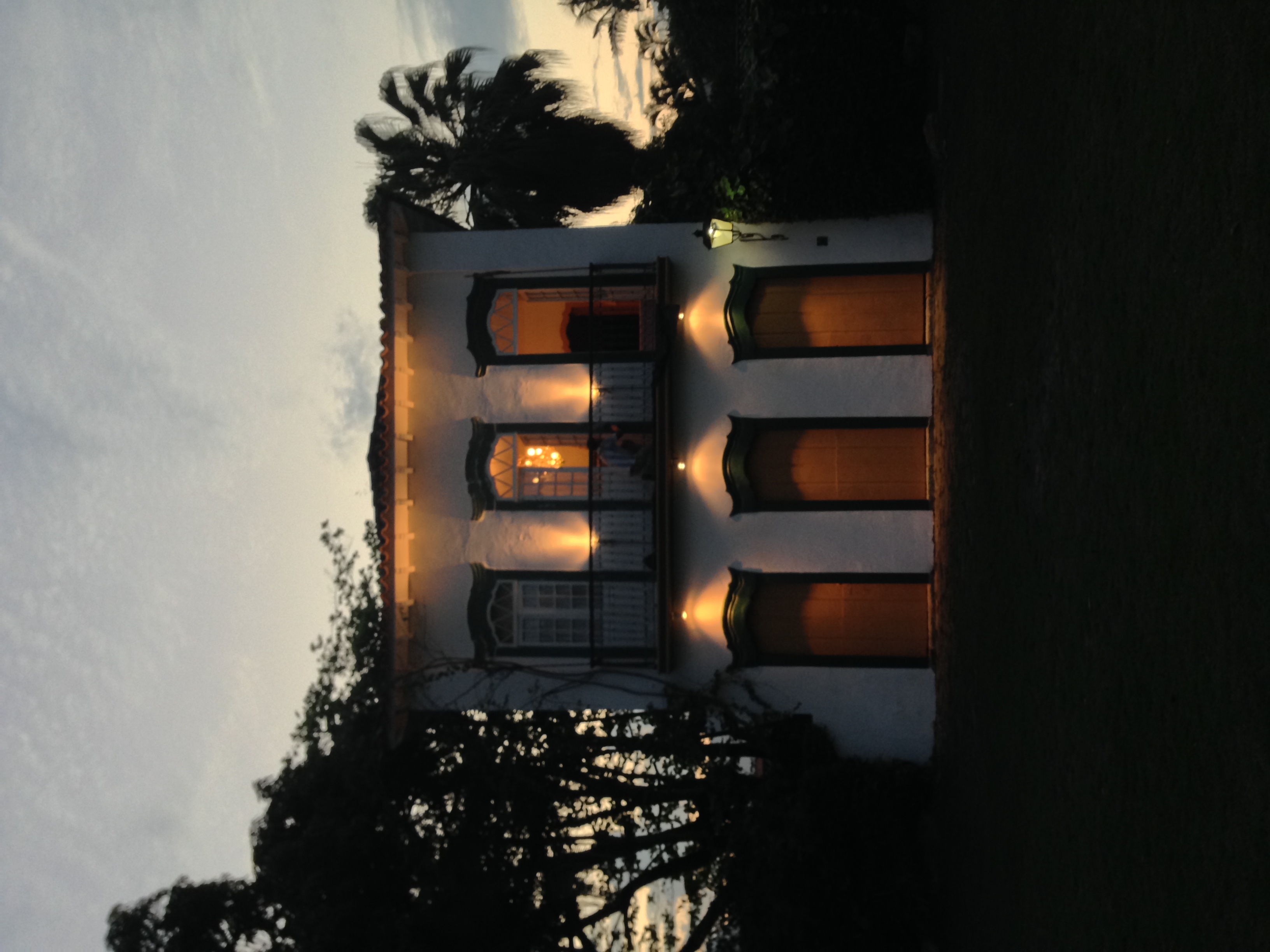
Searching for Satellites came to her as a sound before it came as an invitation. When she heard Rafael's early productions — nocturnal, textured, the kind of music that implies movement without hurry — she recognised something she had been trying to name for years.
"It sounded like the exact hour I live in," she says. "Not late. The other side of late." She stops. "I didn't have to explain anything to the music. It already knew."
She describes what she does in the project not as performance but as placement. A voice, she says, changes depending on where you put it in a room. Some rooms you enter and know immediately where to stand. Rooms have emotional acoustics too — the shape of a space changes what can be heard inside it.
"This was one of those rooms," she says. "I walked in and there was already a place for me."
The songs orbit a specific emotional location — roads, distances, the things you recognise too late. Same Light is about seeing someone across an unbridgeable gap and staying still anyway. Strange Autumn is about a world moving too fast and the person who briefly stops it. Don't Break Down is a conversation with a machine the way you have conversations with people — half joking, entirely serious.
"I think all the songs are about the same distance," she says. "Between where you are and where something true is happening. The question is never really whether you close it. It's whether you can stand there and not look away."
The next song is called Quiet Places. She is careful with it, the way you're careful with something still becoming itself.
"It's about finding someone in the parts of yourself you forgot to protect," she says. "The places you left unlocked." She considers this for a moment. "I think it's the most precise thing I've done. I don't know yet if precise and finished are the same thing."
She finishes her coffee. Outside, São Paulo moves the way it always moves — which is without apology and with a lightness that still surprises her.
She picks up her father's Contax from the desk. Sets it down again.
"I'm a bad explainer of myself," she says. "I think that's why the songs exist."
All photography by Rafael del Castillo
Searching for Satellites' latest single Same Light is out now on all platforms.
Quiet Places is forthcoming.